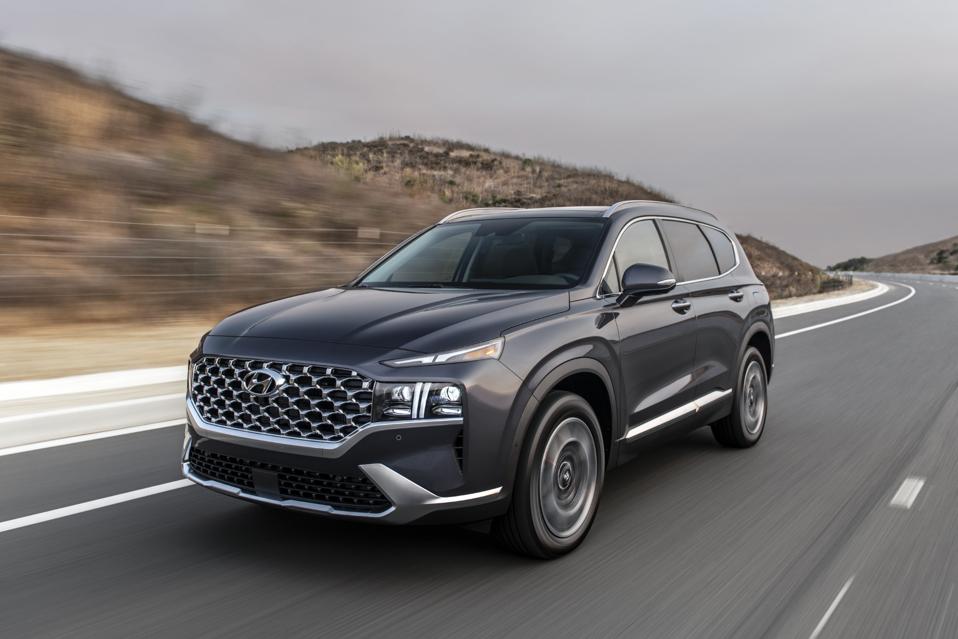
As the fourth-generation Hyundai Santa Fe heads into just its third model year, it’s already getting a significant update that includes both visual and mechanical changes including an all-new powertrain lineup. Most notably, for the first time it will be offered with a hybrid powertrain including a plug-in variant.
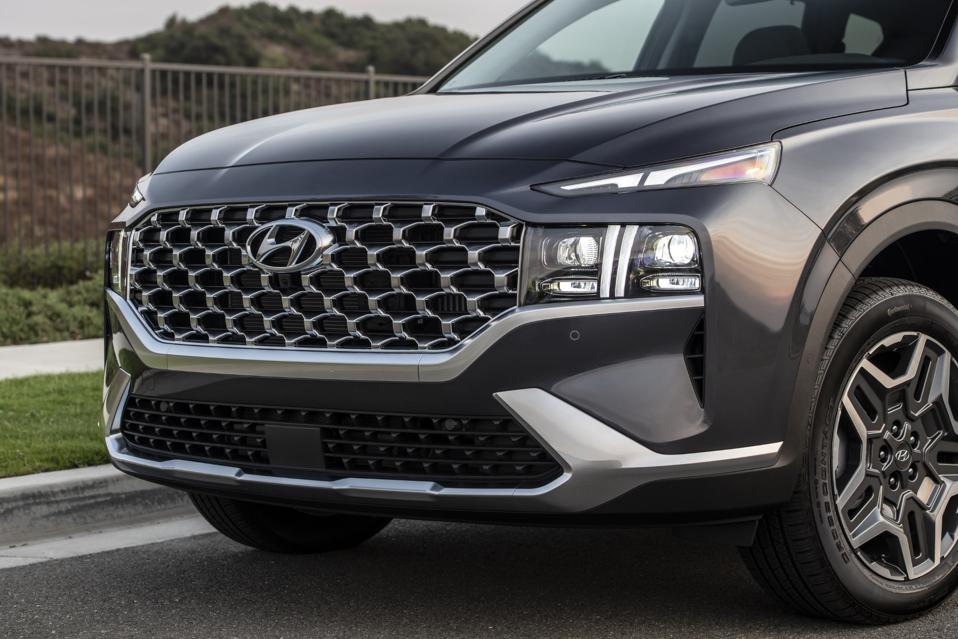
While the basic shape of the Santa Fe is retained as you would expect this early in its lifecycle, the face has gotten a surprisingly substantial change. The grille, as has become the custom of late is larger but it’s integrated in a way that it doesn’t seem as outlandish as recent efforts from sister brand Genesis or particularly BMW.
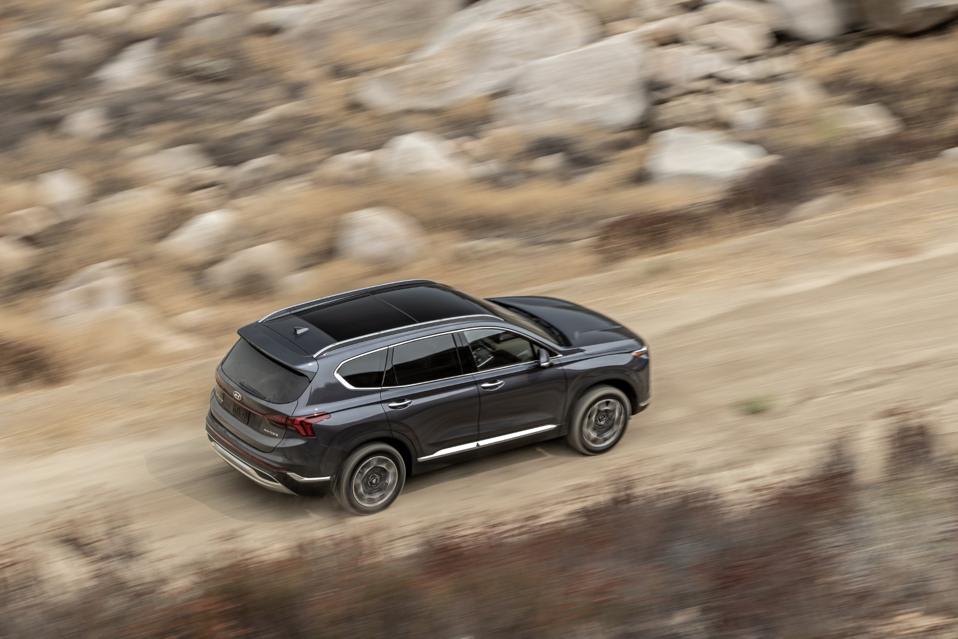
The slim horizontal running lamps across the top outer edges of the fascia are retained, but the headlamps below have been reconfigured horizontally rather than vertically stacked. The lamps now seem integrated into the outer edges of the grille rather than being a separate island surrounded by body color. At the rear corners, the taillamps have the same shape but the interior details have also been reconfigured and a slm horizontal reflector ties the two sides together.
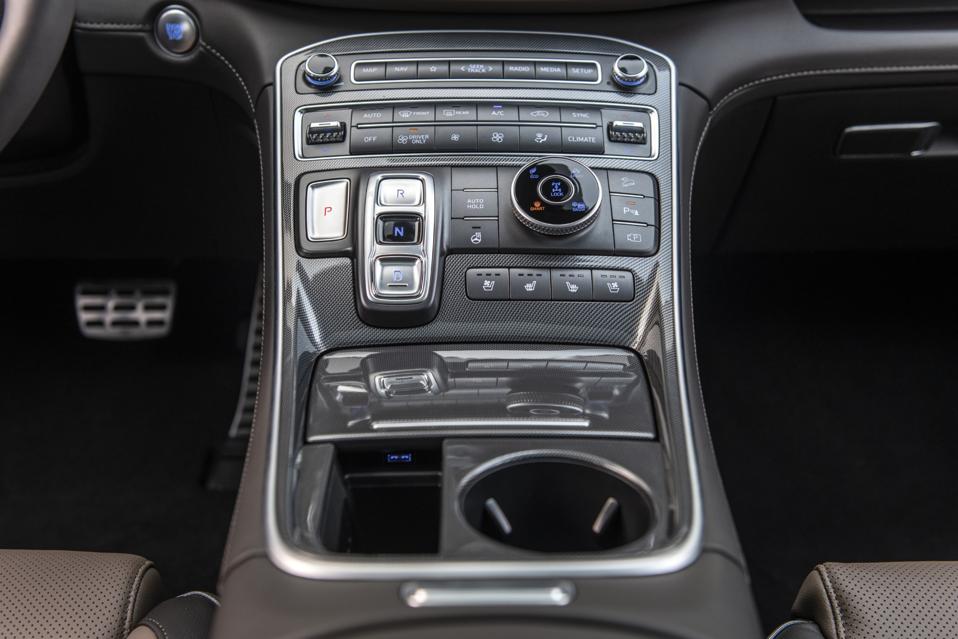
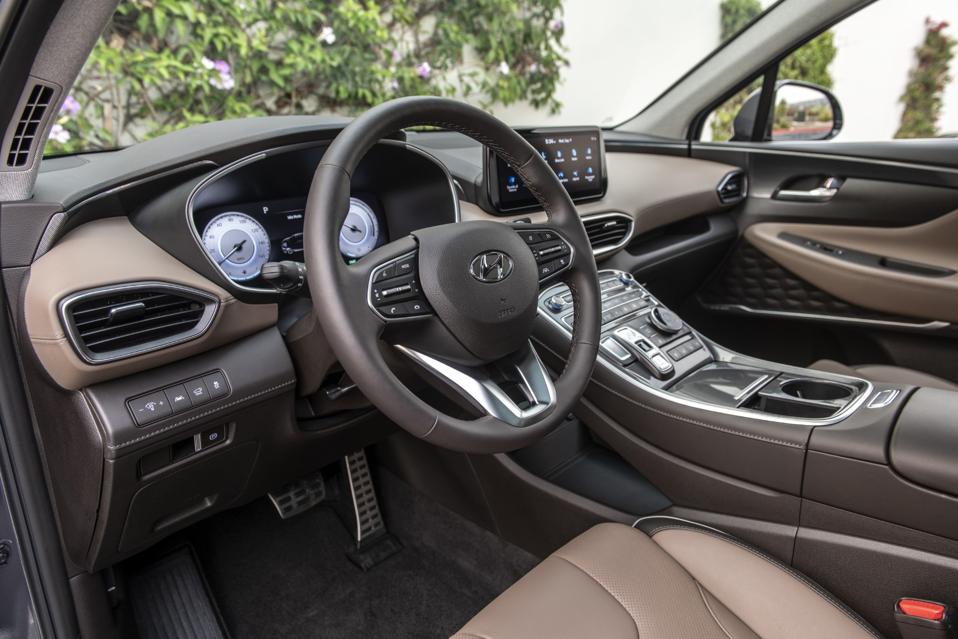
On the inside, the dashboard is basically unchanged although some materials have been upgraded to provide a more premium feel. The most noticeable change is a completely new center console design. It now sweeps upward leaving an open storage space below. This has been made possible by the replacement of the traditional transmission shift lever with the same electronic switch setup found on the Sonata and Palisade.
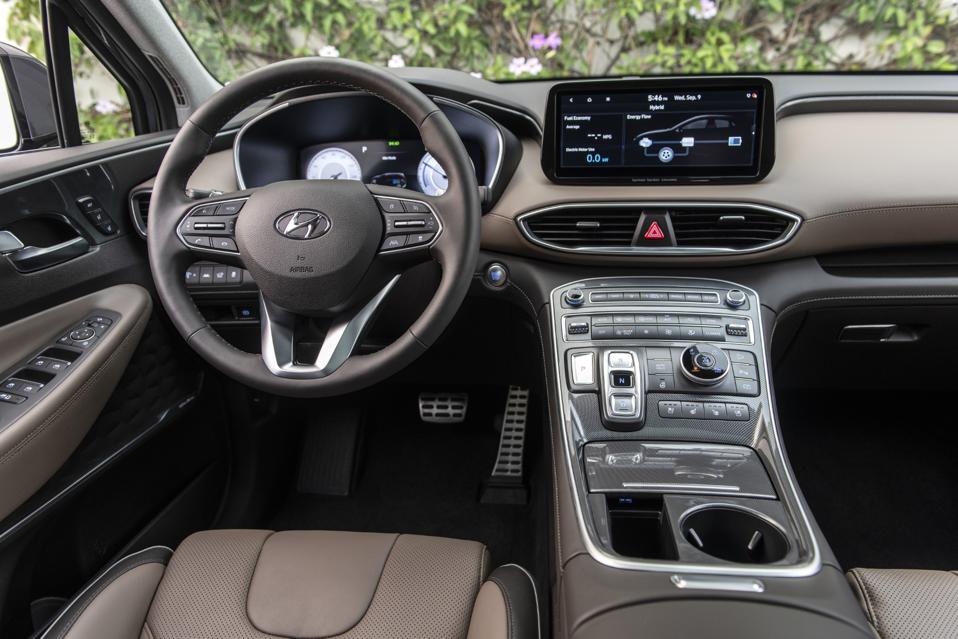
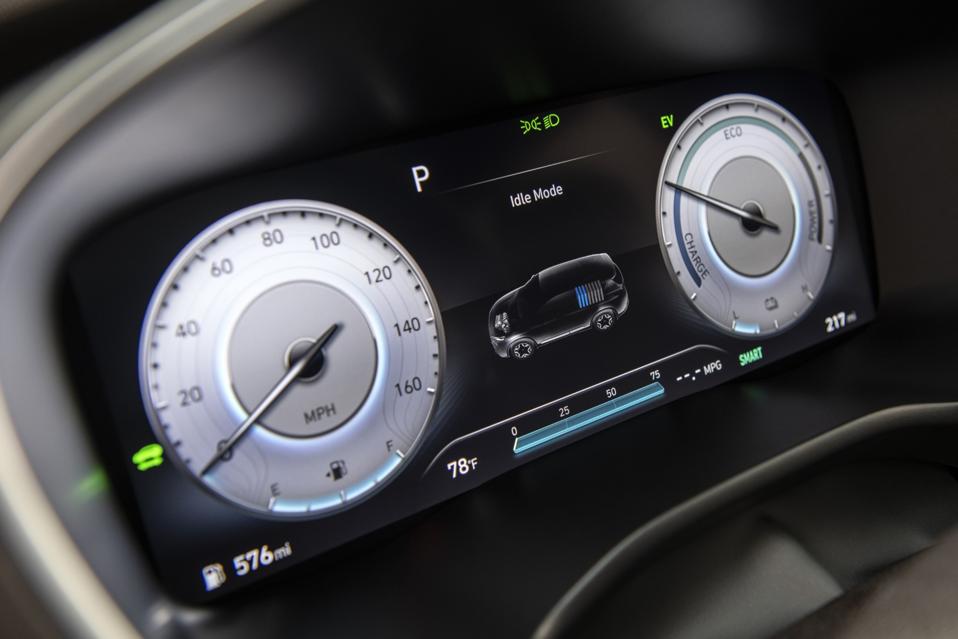
The old hybrid analog and digital instrument cluster has also been replaced by a 12.3-inch display similar to its siblings. The infotainment display also gets an upgrade with the 8-inch display that was previously only in the Limited now becoming the standard unit. The top-end navigation display is now the same 10.25-inch widescreen unit found in – you guessed it, the new Sonata as well as the 2020 Ioniq and Palisade.
Hyundai has also updated the driver assist features for 2021 pedestrian and cyclist detection logic added to the existing forward collision avoidance system. The highway driving assist that works to keep the vehicle centered in the lane has also been added. This functions much like Nissan’s ProPilot assist in conjunction with adaptive cruise control, but like the Nissan system isn’t hands-free. On Santa Fes with built-in navigation, the adaptive cruise control uses the map data to look down the road and automatically adjust speed if there is a curve that is too sharp to safely handle at the current set speed. The vehicle will slow down through the curve and resume the previous speed afterward.
The Sonata-fication of the Santa Fe continues in the engine compartment with essentially the same lineup as the midsize sedan. Hyundai’s latest 2.5-liter Smartstream four-cylinder supplants the 2.4-liter. Like many newer engines, this one features both direct and port fuel injection. This leverages the high-load efficiency of spraying fuel directly into the combustion chamber and the reduced particulate emissions of port injection at low loads and cold start. This one produces 191-hp and 182 lb-ft of torque.
The 2.0-liter turbocharged engine that previously served as the premium option also gives way to a boosted version of the 2.5-liter that generates 277-hp and 311 lb-ft of torque. The naturally aspirated engine uses Hyundai’s conventional torque converter 8-speed automatic transmission while the turbo is mated to the company’s new wet dual-clutch 8-speed that is also being used in the N and N-line models. All of these changes add up to 4% better fuel efficiency for the base engine and approximately 9% for the turbo.
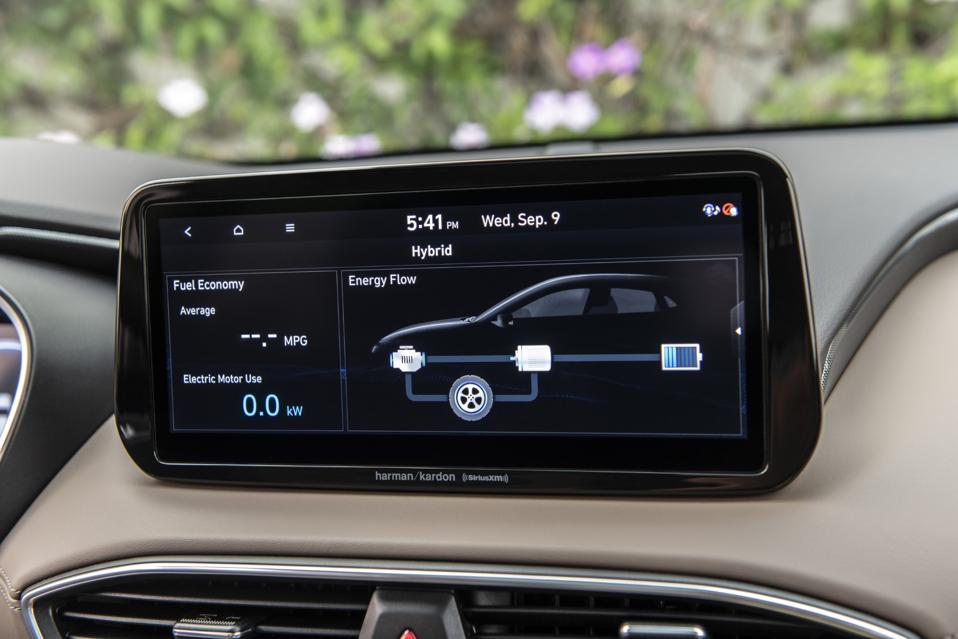
As part of Hyundai’s company-wide eco-engine strategy, the Santa Fe is also getting electrified for the first time with both hybrid and plug-in hybrid variants. The hybrid architecture is basically the same as Hyundai has used for the past decade with an electric motor in place of the torque converter between the engine and transmission and an integrated starter generator (ISG) replacing the typical alternator. The primary motor delivers 44-kW compared to 39-kW in the Sonata hybrid and the ISG contributes another 13-kW.
Instead of the naturally aspirated 2.0-liter engine the sedan, the Santa Fe uses Hyundai’s popular 1.6-liter turbocharged unit set to output 178-hp. The combination of the two permanent magnet motors and the internal combustion engine produces a total of 225-hp and 195 lb-ft of torque. The Santa Fe hybrid will also get all-wheel-drive as standard equipment when it arrives in the first quarter of 2021. Later in the year, Hyundai will be adding a plug-in hybrid variant with a larger battery to support some amount of all-electric driving although at this point full specs aren’t being released yet.
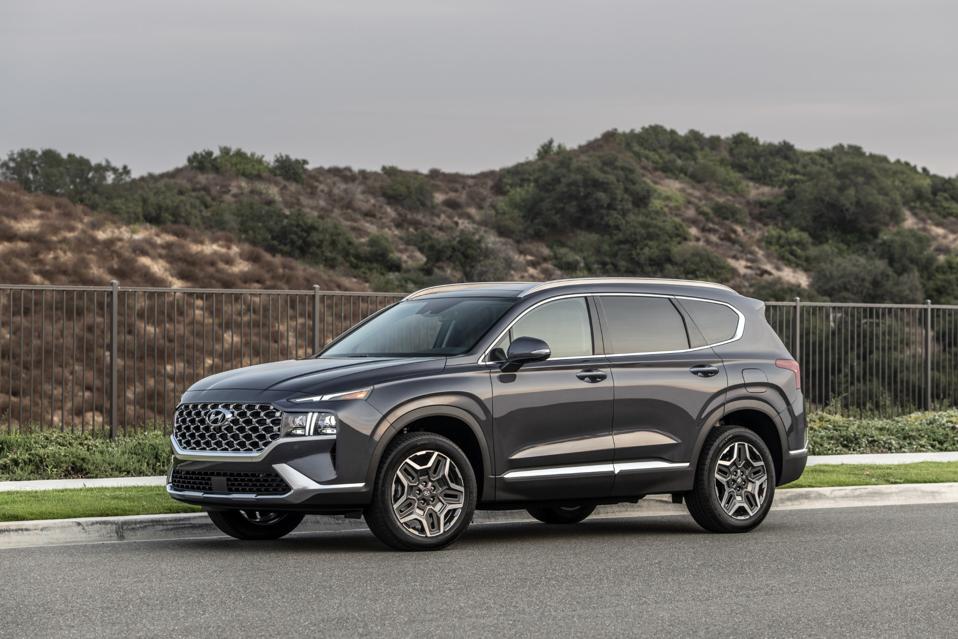
In keeping with much of the market trying to offer more premium options, Hyundai is adding a new trim level above Limited that surprisingly isn’t called platinum. The Calligraphy trim gets the turbo 2.5 with all-wheel drive as standard along with 20-inch alloy wheels. Upgraded trim inside and out includes Napa leather seating and almost everything comes standard.
The non-hybrid Santa Fe should be arriving at dealerships before the end of the year with the hybrids coming a few months later.
https://www.forbes.com/sites/samabuelsamid/2020/10/12/hyundai-santa-fe-gets-a-facelift-and-hybrid-for-2021/
2020-10-12T00:00:00+00:00