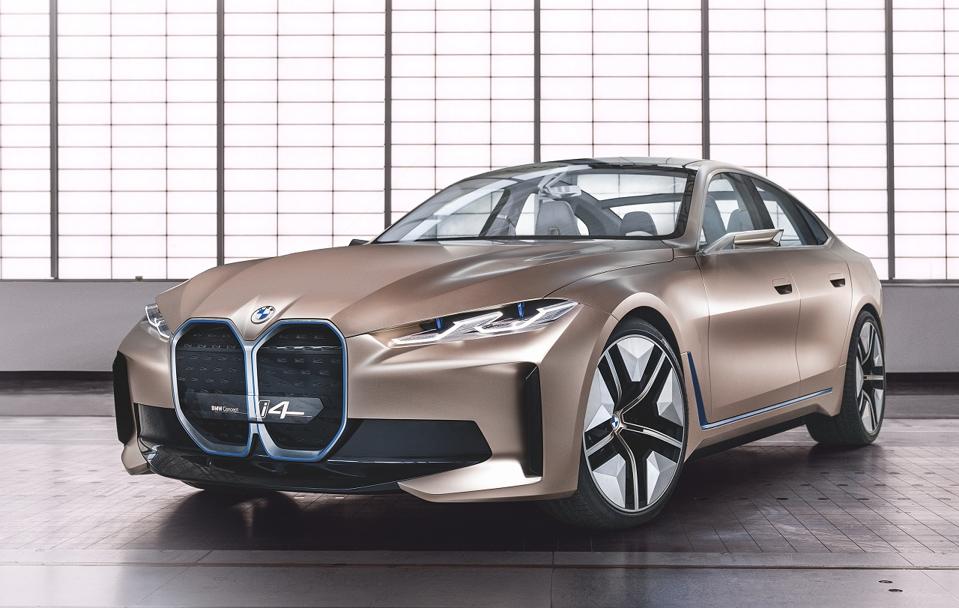
BMW probably isn’t the first brand that pops to mind when you think of battery electric vehicles (BEV). While the German brand hasn’t yet jumped into the deep end with both feet on zero emissions, it began it’s development back in 2007 and launched it’s first consumer pilot with the Mini E in 2008. So far it only has one dedicated BEV, the i3 which has sold about 160,000 units since 2014 but many more are coming soon including i4 sedan that debuts as a concept this week.
The Concept i4 was scheduled to be revealed at the now-canceled Geneva Motor Show but like the other debuts that were supposed to happen there, it came out online instead. The i4 is one of two new purpose-built BMW BEVs that go into production in 2021 along with the iNext (expected to be badged i20) SUV. They join the i3, the just launched Mini E, the iX3 coming later this year and a battery-powered 3 series.
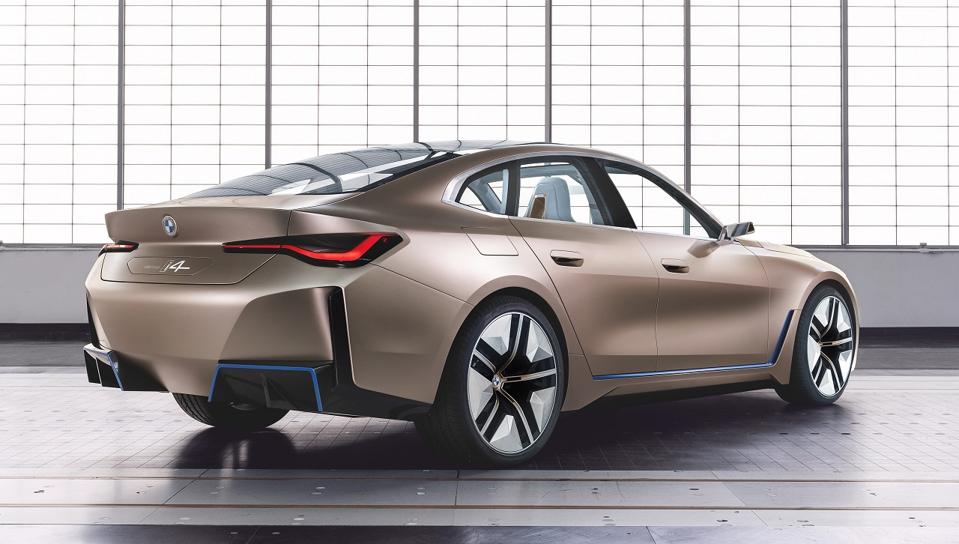
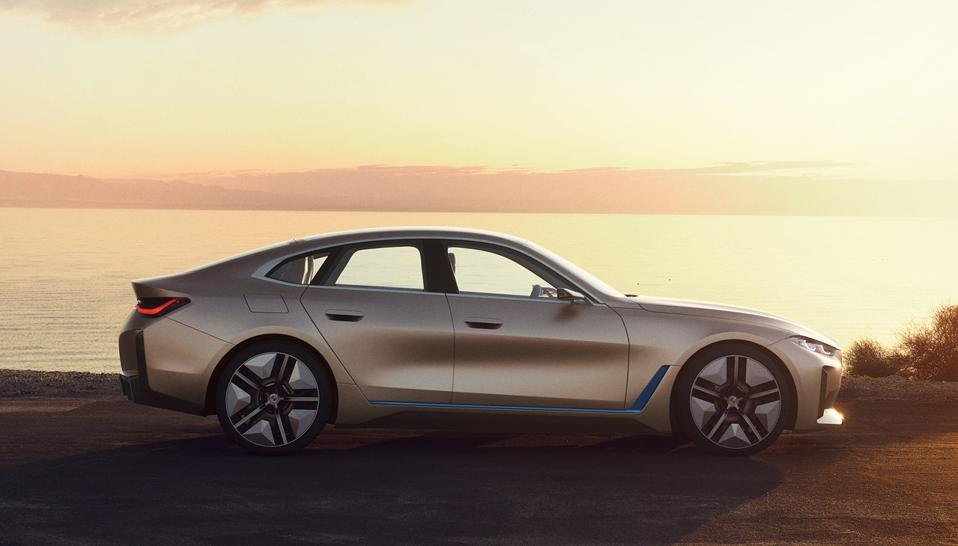
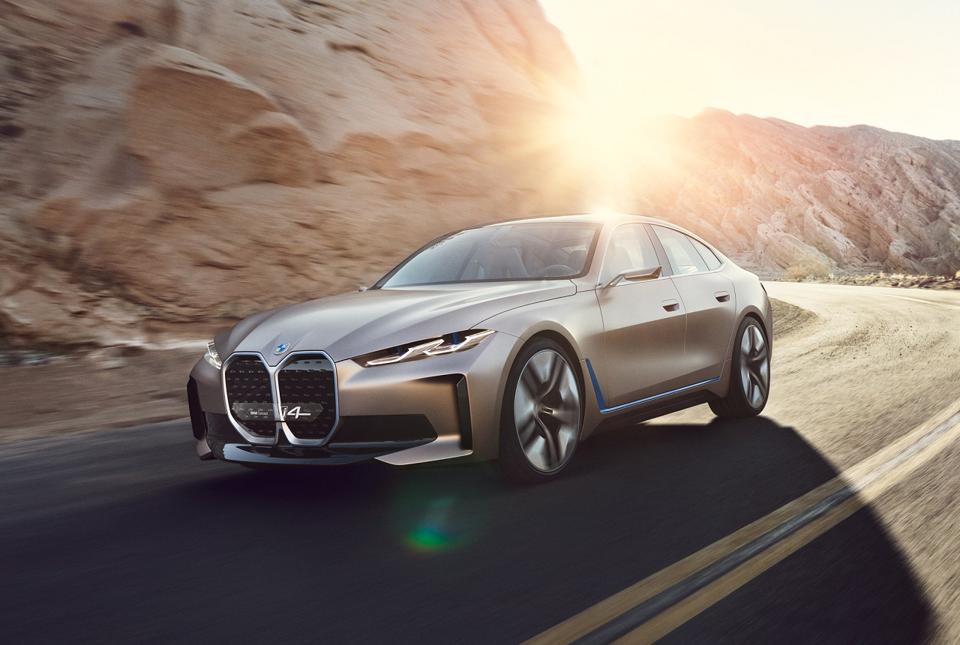
The i4 is a midsized four-door coupe-sedan conceptually similar to models like the 4-series Gran Coupe. Like the iNext that we saw in 2018, it features the brands new design language that will feature on its electric-only models. The surfaces are smoother than what we’ve seen in recent years with less prominent sculpting on the sides but sharper creases in the metal.
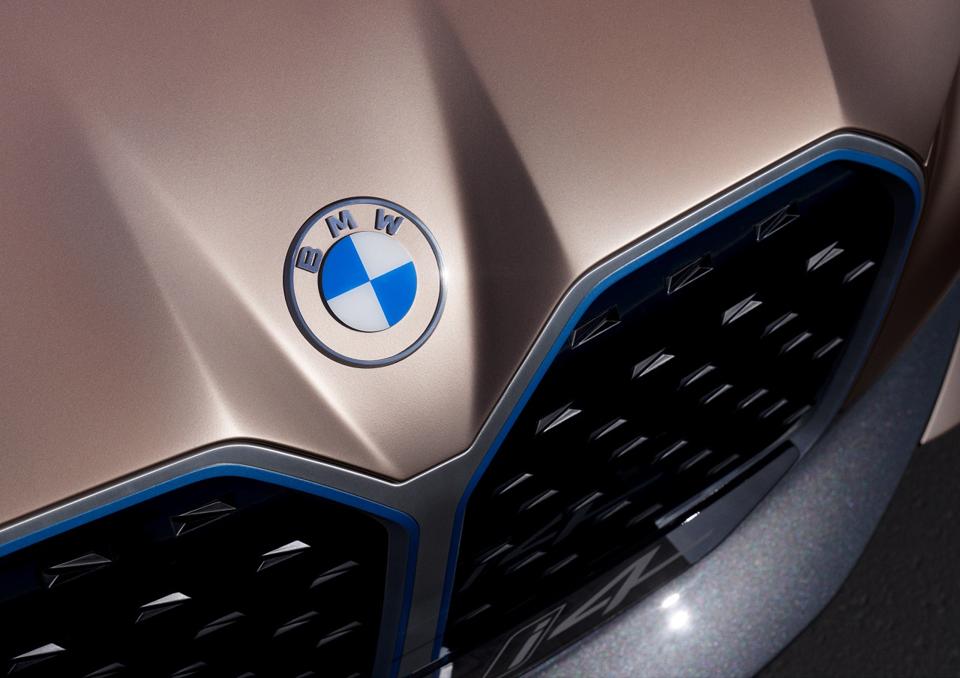
It also features the very prominent twin-kidney grille that has come to dominate the face of brand in the past couple of years and seems unlikely to shrink to a more reasonable size any time soon. The classic BMW roundel also has a new look. The blue and white spinning propeller has been given a flat two-dimensional appearance. The letters B-M-W now float in a transparent ring rather than the black version that has been used for decades.
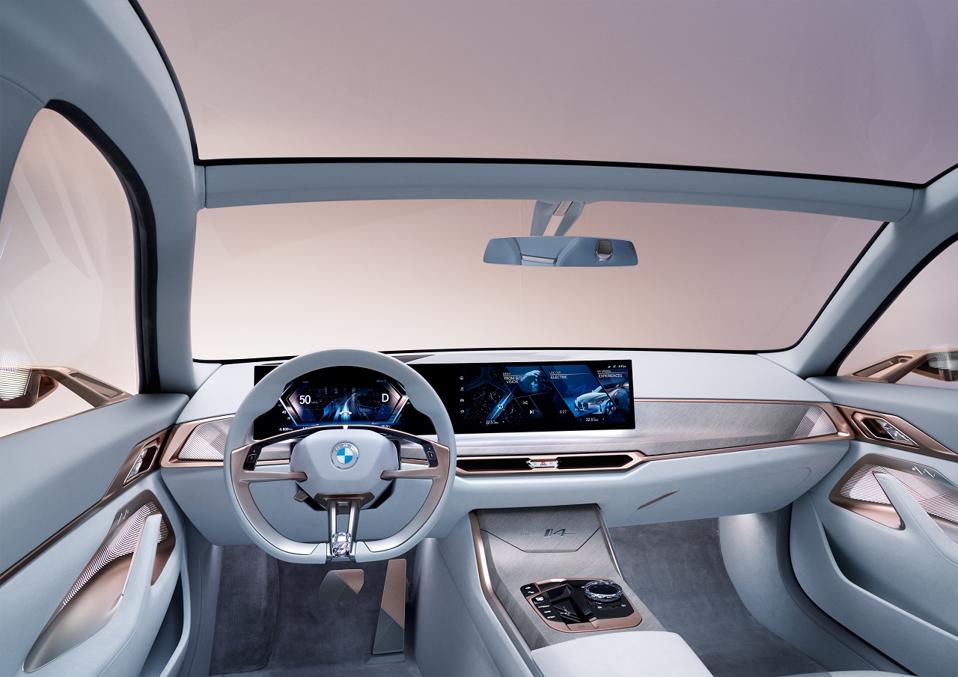
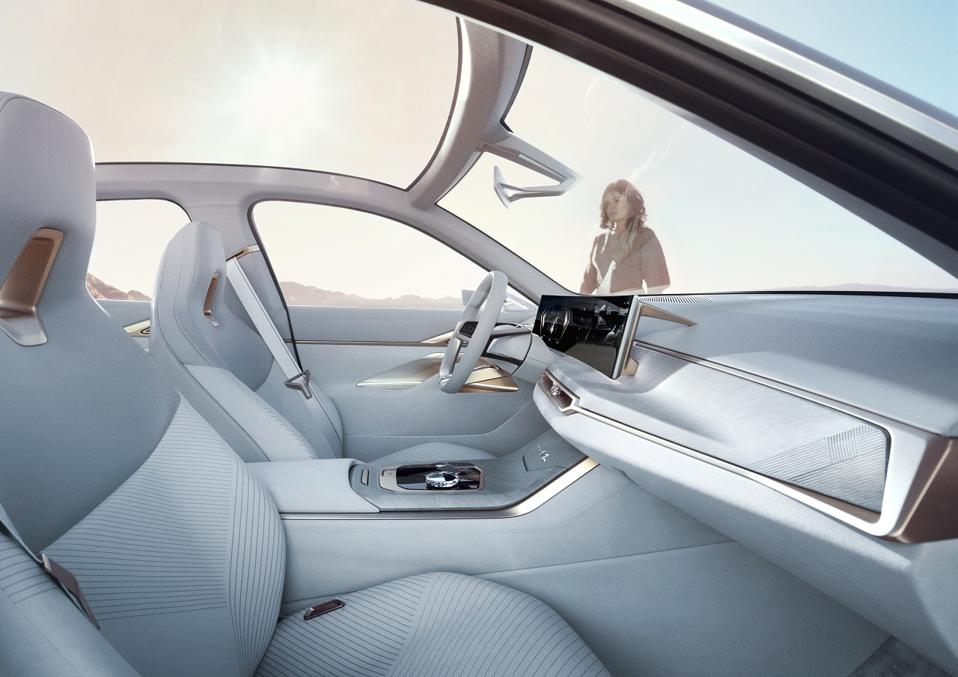
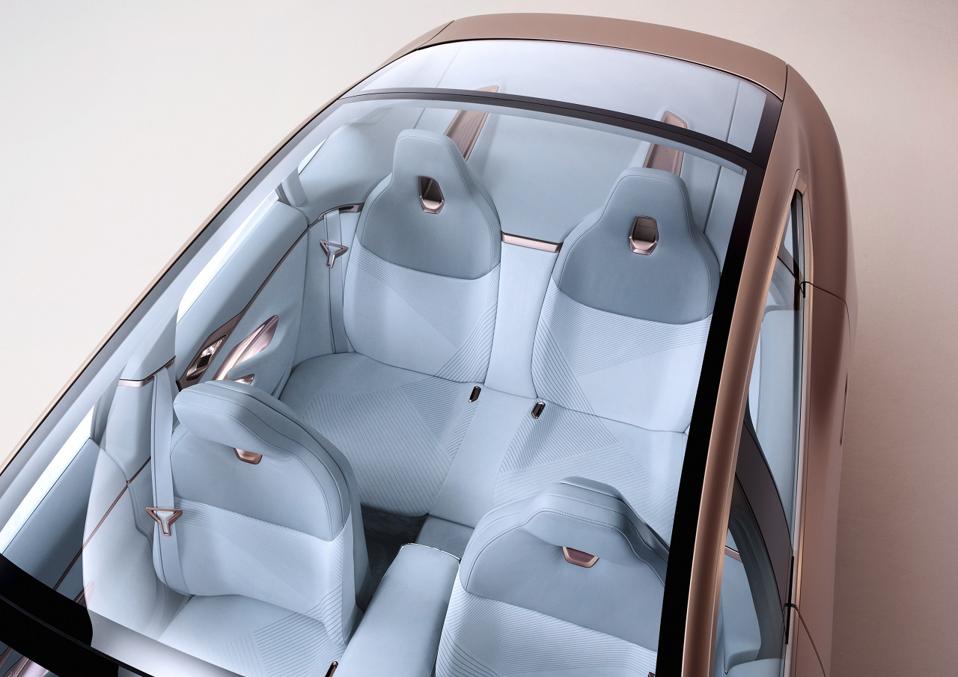
Inside, BMW is continuing with the minimalism that we saw on the i3 and which has become common on BEVs. The two displays are now merged into a single seamless unit that spans two-thirds of the dashboard. The display area is curved toward the driver although less prominently than in the recently announced Cadillac Escalade. The portion in the center of the dash is a touchscreen but an updated iDrive controller is also retained. BMW claims the display is glare-free and doesn’t require a hood as used on most current BMWs.
When the electric iX3 goes into production later this year, it will be the first to use BMW’s new fifth-generation electric drive hardware that will come to the i4 and iNext as well. This new hardware features new more efficient motors and power electronics as well as a new battery pack design. The motors will produce up to 530 hp which combined with the instant torque should make this sedan easily outrun any M3 or M4 to date.
BMW has been developing its own lithium ion cell chemistries in-house and working with suppliers on volume production. In order to support its electrification ambitions in the coming years, BMW has set up long-term supply contracts for the raw materials which comprise 90% of the bill of materials cost of the battery. Lithium will be sourced from mines in Australia with cobalt will coming from Australia and Morocco.
The new battery pack design is claimed to be slimmer than previous units which allows for a lower vehicle profile. The concept is reported to be equipped with an 80-kWh pack that is projected to provide an EPA cycle range of about 270 miles. That’s somewhat short of what Tesla is achieving but better than Audi, Porsche, Jaguar or Mercedes-Benz have accomplished to date.
The production i4 will be built in a revamped plant in Munich along with other BMW models with gasoline, diesel, and plug-in hybrid powertrains sometime in 2021.
https://www.forbes.com/sites/samabuelsamid/2020/03/03/bmw-i4-concept-previews-next-dedicated-ev-from-munich/
2020-03-03T14:42:00+00:00